Edition #3 · 13th August 2026
The Dance Fan Who Never Left
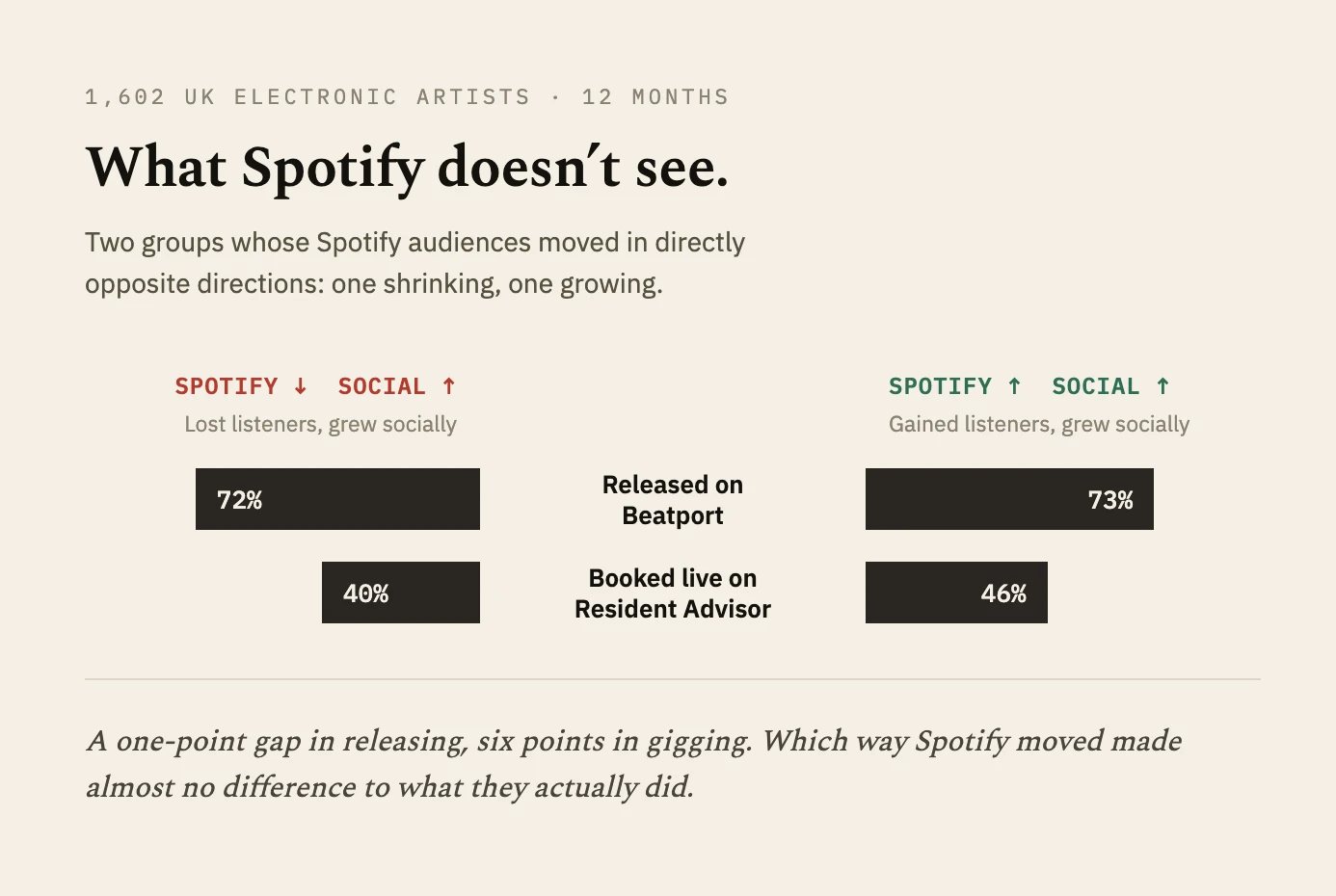
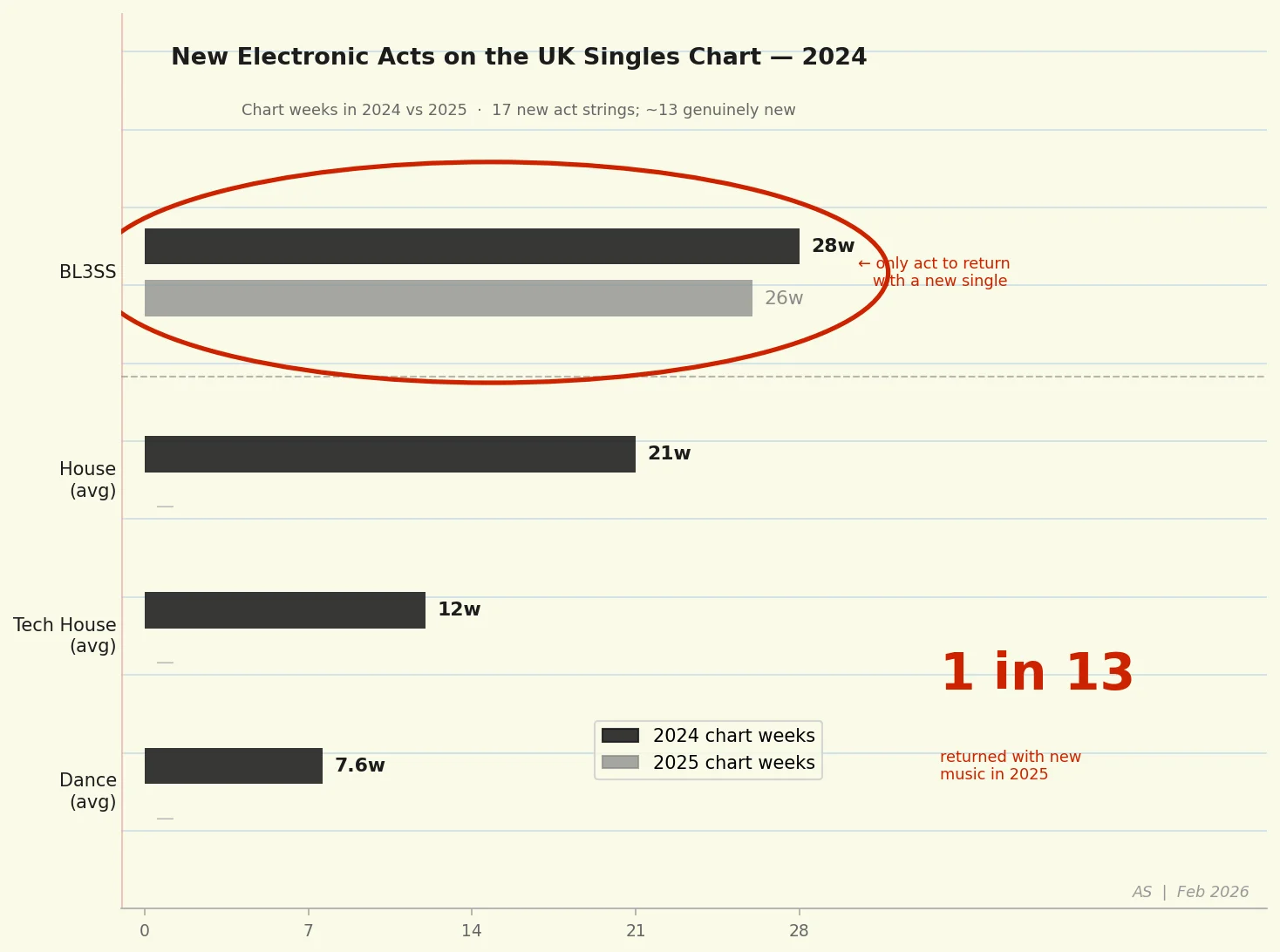
The B-Side #2 asked what streaming misses about developing UK electronic artists. David Martin, CEO of the Featured Artists Coalition, told us it gave him a new way to think about what counts as underground dance music and what counts as mainstream. In this issue, we run the same kind of comparison on a different audience.
Richie Hawtin, the Canadian producer and one of techno's most influential figures for three decades, played a seated dinner set for {PAIRED}, a live series from Carousel and Belfast's AVA Festival, at the Serpentine Gallery in London on 18th July 2026. Doors opened at 4.30pm. He finished at 10pm. All 180 tickets sold at £230 each.
It's worth unpacking.
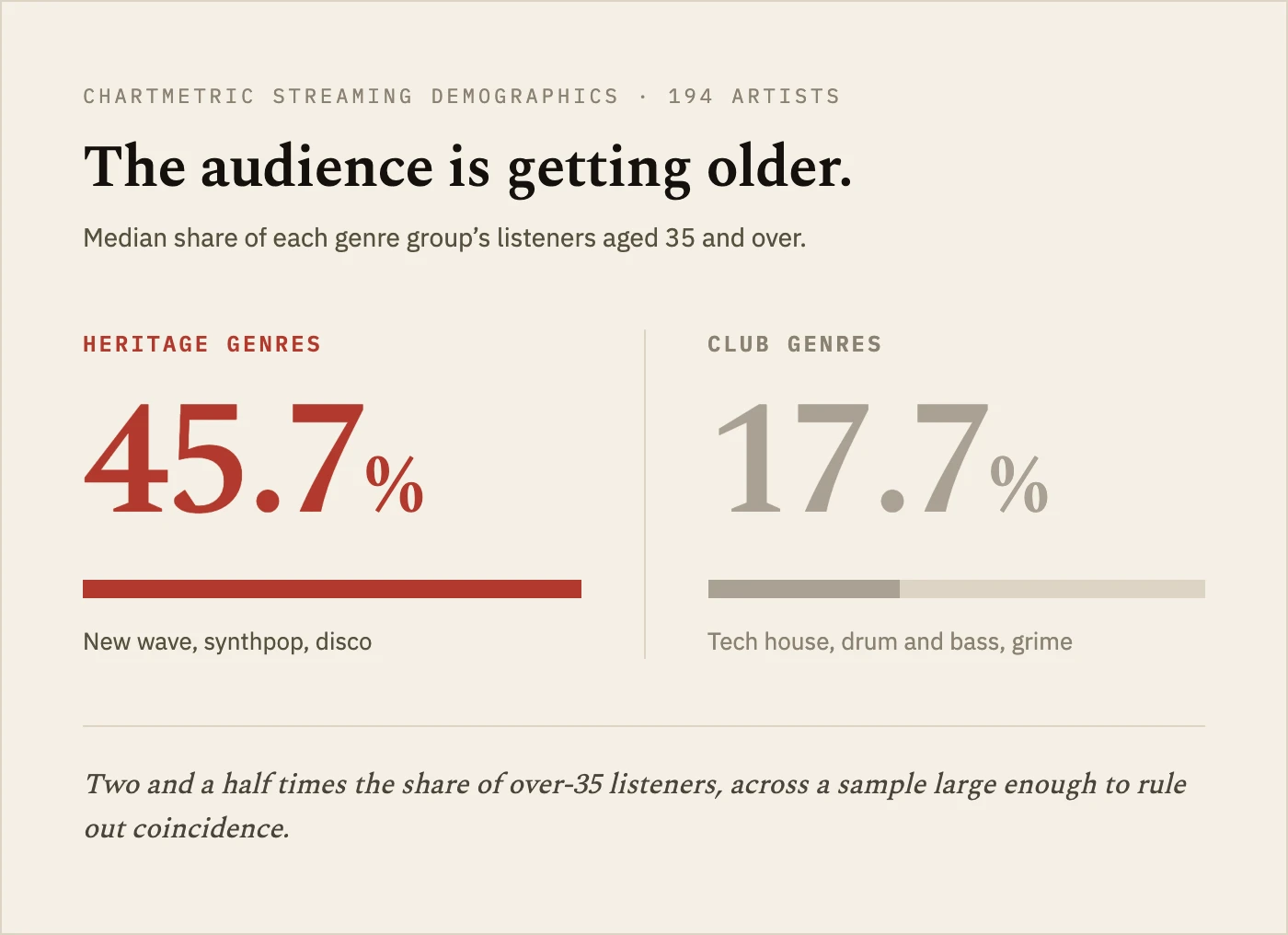
We looked at two different measures of the same audience: streaming demographics from Chartmetric and live event listings from Resident Advisor. On streaming, heritage genres such as new wave, synthpop and disco show a median audience share of 45.7% aged 35 and over, against 17.7% for tech house, drum and bass and grime. That comparison covers 194 artists, enough to rule out coincidence. Depeche Mode has 16.3 million monthly listeners, and that number is climbing. Pet Shop Boys has 9.9 million, also climbing. On this measure, the older dance music audience is one of the more active parts of the catalogue.
The Live Side of the Story
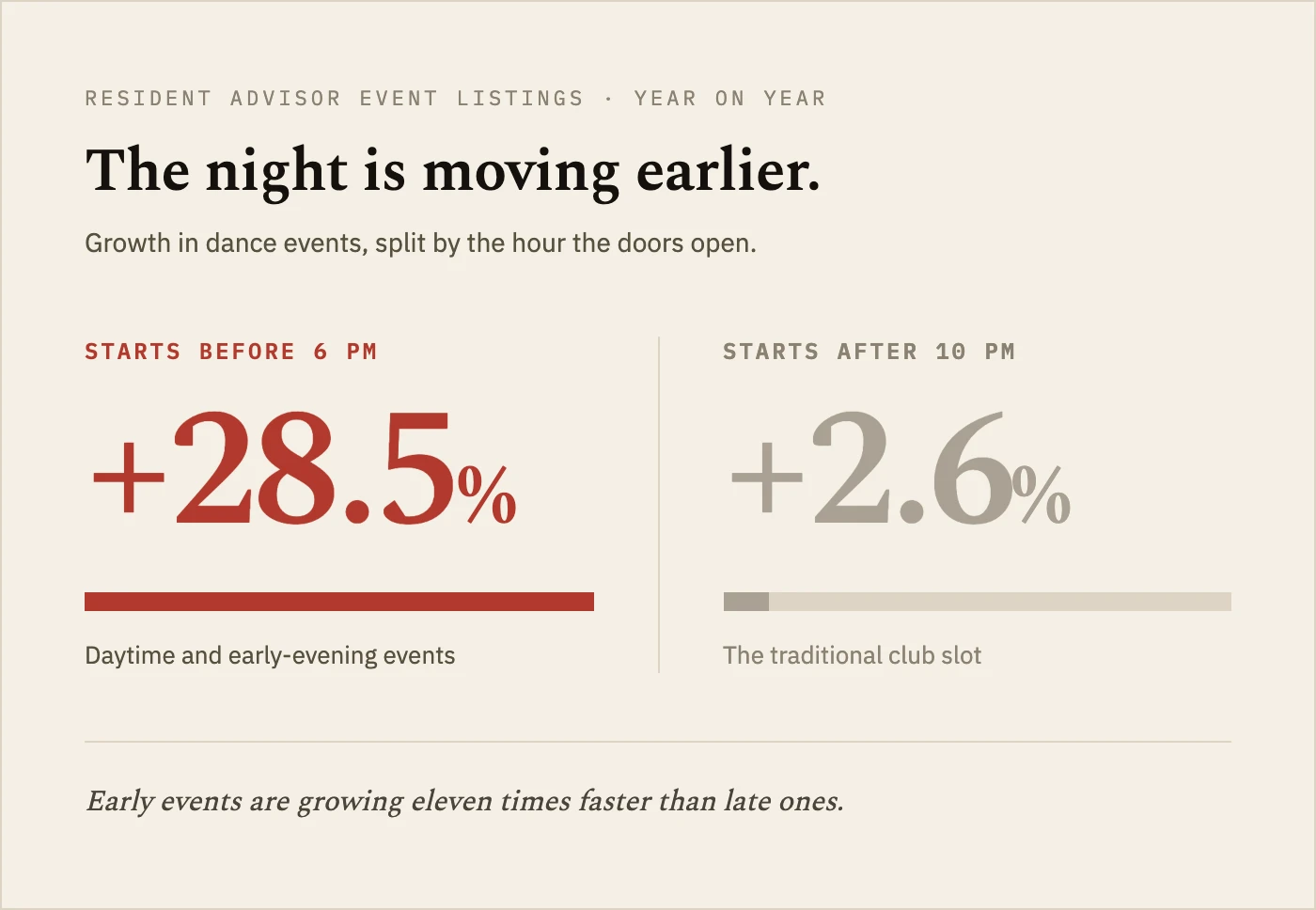
Live data tells a similar story. Events starting before 6pm grew 28.5% year on year in the Resident Advisor figures, against 2.6% for those starting after 10pm. House, the genre with the largest sample in the streaming data and a 35-and-over audience share of 23.7%, is also one of the fastest-growing daytime genres, up 29.5% over the same two years. The genre ageing fastest on streaming is the same one moving earliest into the afternoon.
Professor Alice O'Grady of the University of Leeds adds a different kind of evidence. Her research, published in Psychology of Music, is based on interviews with women over 40 who still take part in dance music culture. It found sustained participation well past the age the industry assumes it stops.
{PAIRED} Put a Number on It
{PAIRED} is a rare example of a live event built around this audience's actual numbers. The Office for National Statistics counted 11.9 million people in the UK aged 16 to 30 in 1996, and Mintel's clubbing survey from the period suggests around 2.9 million of them went dancing regularly. ONS life tables put about 2.8 million of that generation alive today, aged 46 to 60, with roughly 1.3 million living in £500,000-plus households, according to the ONS Wealth and Assets Survey. Hawtin's dinner cost around 2.5 times the Henley Centre's inflation-adjusted estimate of a night's raving in 1993. It sold out anyway.
Read the full case study: The Rave Generation Grew Up.
If streaming shows this audience is active, and live shows it will pay a premium for the right format, how many examples like {PAIRED} can anyone point to? Are Spotify or Apple Music actually curating for older dance fans, or just catching them inside playlists built for a much broader audience? And beyond streaming, are labels and promoters building any real strategy around a group this large?
Two independent datasets confirm the same thing. This is an opportunity worth acting on. The next sold-out night for an older audience does not have to be a surprise.